
CPU Research in Focus | Sludge to Energy
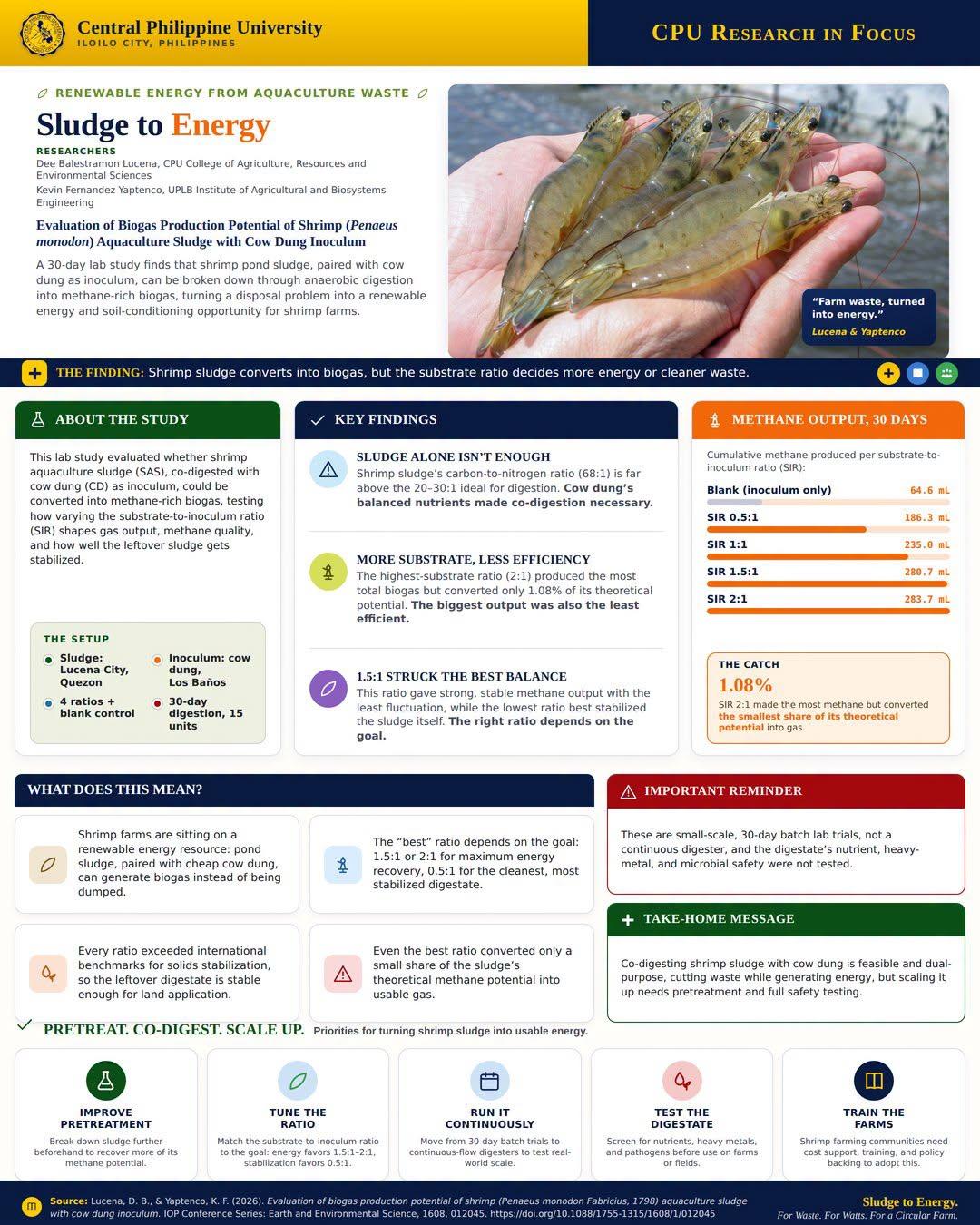
Farm waste, turned into energy.
A 30-day lab study finds that shrimp pond sludge, paired with cow dung as inoculum, can be broken down through anaerobic digestion into methane-rich biogas, turning a disposal problem into a renewable energy and soil-conditioning opportunity for shrimp farms.
What the study found:
Shrimp sludge alone is not enough. Its carbon-to-nitrogen ratio (68:1) is far above the ideal 20–30:1 for digestion. Cow dung's balanced nutrients made co-digestion necessary.
More substrate does not mean more efficiency. The highest-substrate ratio (2:1) produced the most total biogas but converted only 1.08% of its theoretical potential. The biggest output was also the least efficient.
A 1.5:1 ratio struck the best balance. This ratio gave strong, stable methane output with the least fluctuation, while the lowest ratio best stabilized the sludge itself. The right ratio depends on the goal.
Every ratio exceeded international benchmarks for solids stabilization, so the leftover digestate is stable enough for land application.
The takeaway is clear: co-digesting shrimp sludge with cow dung is feasible and dual-purpose, cutting waste while generating energy. But scaling it up needs pretreatment and full safety testing.
Read the full study to see the priorities for turning shrimp sludge into usable energy.
#CentralPhilippineUniversity #CPUResearchInFocus #SludgeToEnergy #Biogas #RenewableEnergy