
𝐂𝐏𝐔 𝐑𝐞𝐬𝐞𝐚𝐫𝐜𝐡 𝐢𝐧 𝐅𝐨𝐜𝐮𝐬 | Lemongrass’s Double Defense
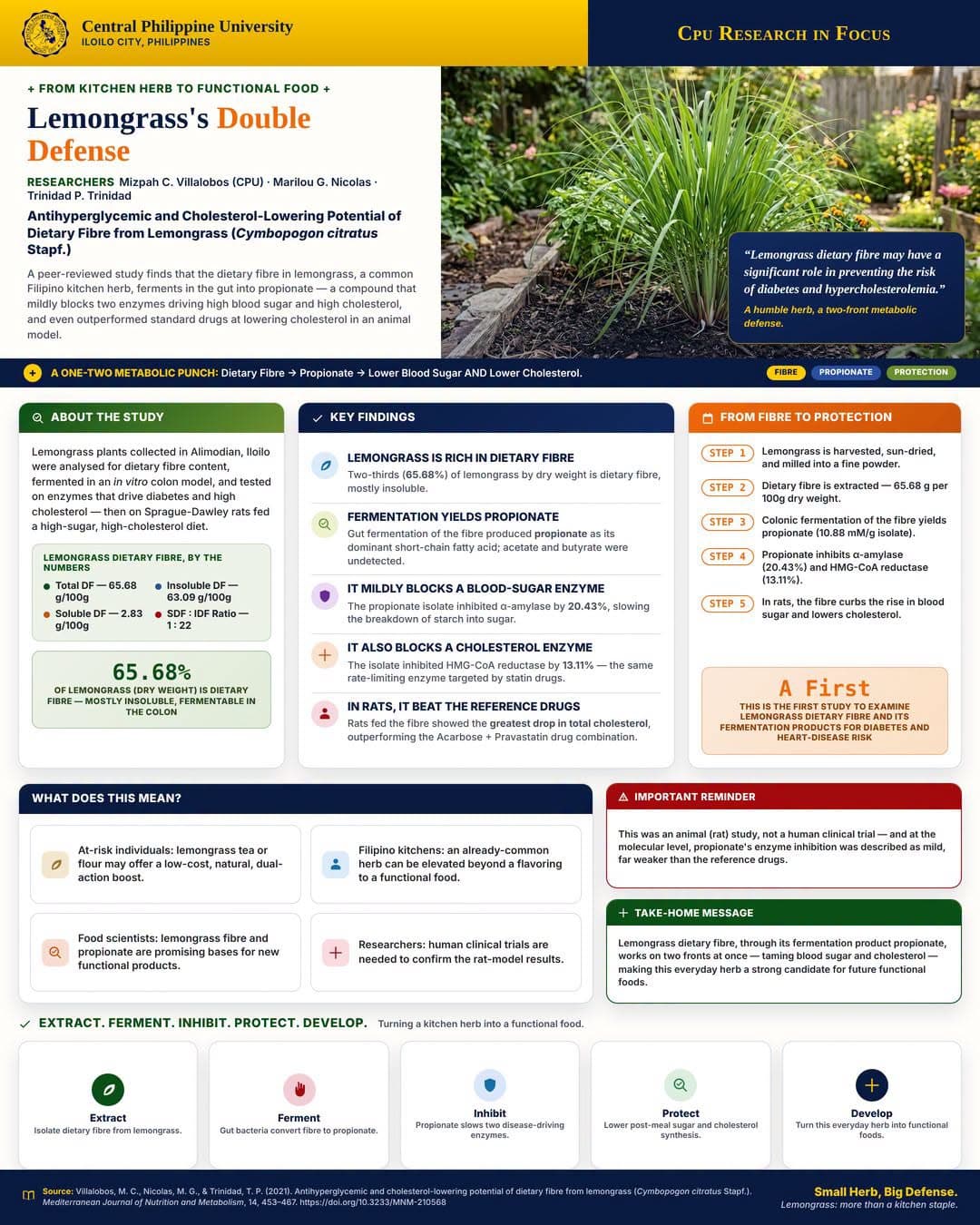
A humble herb, a two-front metabolic defense.
A peer-reviewed study finds that the dietary fiber in lemongrass, a common Filipino kitchen herb, ferments in the gut into propionate, a compound that mildly blocks two enzymes driving high blood sugar and high cholesterol, and even outperformed standard drugs at lowering cholesterol in an animal model.
What the study found:
Lemongrass is rich in dietary fiber. Two-thirds (65.68%) of lemongrass by dry weight is dietary fiber, mostly insoluble.
Fermentation yields propionate. Gut fermentation of the fiber produced propionate as its dominant short-chain fatty acid; acetate and butyrate were undetected.
It mildly blocks a blood-sugar enzyme. The propionate isolate inhibited alpha-amylase by 20.43%, slowing the breakdown of starch into sugar.
It also blocks a cholesterol enzyme. The isolate inhibited HMG-CoA reductase by 13.11%, the same rate-limiting enzyme targeted by statin drugs.
In rats, it beat the reference drugs. Rats fed the fiber showed the greatest drop in total cholesterol, outperforming the Acarbose plus Pravastatin drug combination.
This is the first study to examine lemongrass dietary fiber and its fermentation products for diabetes and heart-disease risk.
The takeaway is clear: lemongrass dietary fiber, through its fermentation product propionate, works on two fronts at once, taming blood sugar and cholesterol, making this everyday herb a strong candidate for future functional foods.
DOI: 10.3233/MNM-210568
Read the full study to see how a kitchen herb becomes a functional food.
#CentralPhilippineUniversity #CPUResearchInFocus #Lemongrass #FunctionalFood #DiabetesPrevention #CholesterolHealth #ScientiaEtFides #SmallHerbBigDefense